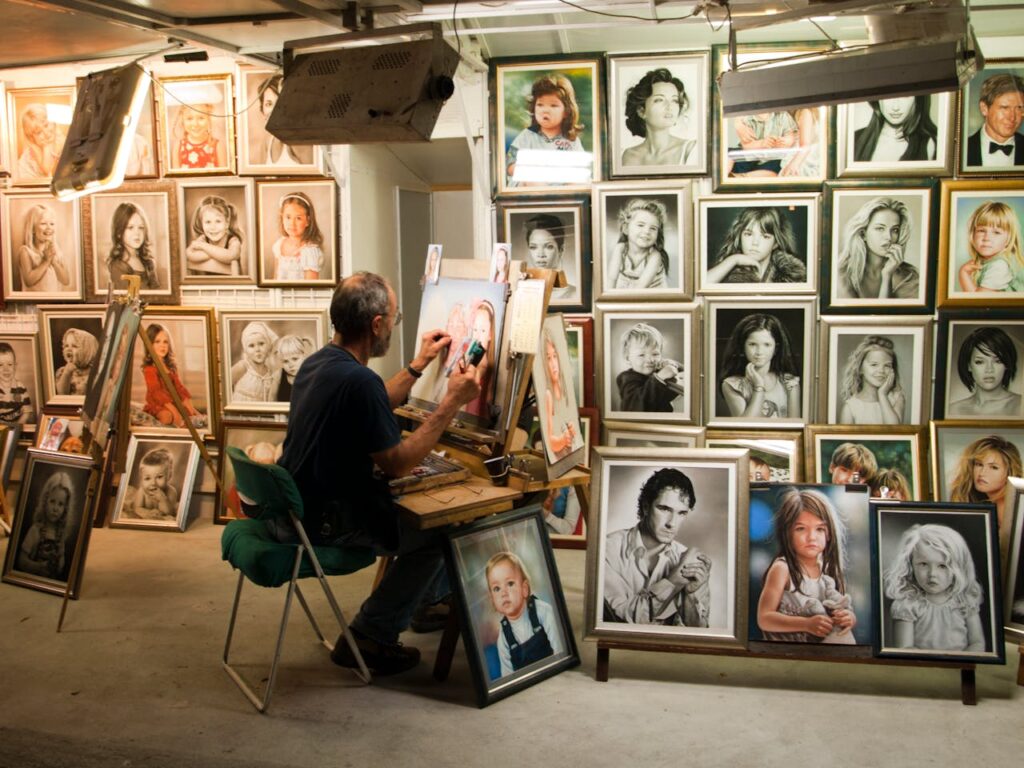

Why Every Artist Needs a Dedicated Art Studio Space
There’s something magical that happens when you step into a space created only for your art. The moment you enter, your mind shifts into “creator mode,” and you feel the urge to start painting, sketching, or experimenting with new ideas. A dedicated art studio space gives your creativity room to breathe. It becomes your personal sanctuary where inspiration feels natural and uninterrupted. For many artists, this simple environmental shift is what transforms a casual hobby into a committed art practice that grows every day.
Setting up an art studio at home or in a separate workspace doesn’t need to be complicated or expensive. What matters most is creating a functional, organized environment that supports your workflow. Start with a sturdy studio easel—a must-have for painters working on medium to large canvases. Add material racks or open shelves to store paints, mediums, sketchbooks, and tools in a clean, accessible way. Use storage boxes for art supplies to compartmentalize smaller items like charcoal, pencils, tapes, and palette knives. A dedicated brush storage holder keeps your brushes protected and helps them last longer. If you create multiple artworks at once, canvas storage racks are extremely helpful for safely keeping finished or in-progress paintings. A strong work table and a comfortable chair or stool give you a place for sketching, planning compositions, or taking a break between layers. You can also create a small painting display corner to pin references, inspiration, or unfinished works that keep your ideas alive.
Lighting is one of the most important elements of a productive art studio. Good natural light completely changes how you see colors, mix paints, and control values. If your space has a large window or soft daylight, you’re already at an advantage. But if natural light is limited, invest in daylight-balanced spotlights or high-quality LED lamps. These not only illuminate your canvas correctly but also reduce eye strain—making your painting sessions longer and more comfortable. Another essential part of an efficient studio is a wash basin or access to water. Being able to clean your brushes, hands, and tools instantly saves time and keeps your creative flow uninterrupted.
Building a dedicated workspace for artists isn’t only about organization—it’s about building the right mindset. When you walk into a studio that is clean, inviting, and filled with your personal tools, you feel naturally more motivated to create. It gives your artistic goals structure, routine, and a strong sense of identity. You start taking your art seriously because your environment encourages consistency and growth. A studio becomes a place where you experiment freely, develop your artistic style, and grow your painting skills without any pressure.
For aspiring artists, setting up an art studio is one of the most powerful steps in building a sustainable, confident art practice. Your studio becomes your creative world—your stage, your playground, your laboratory. And in that space, your best ideas begin to bloom.